6+ Years of Pinterest Traffic: What’s Changed & What Still Works
One of my travel blog’s primary traffic sources, aside from Google organic traffic, is Pinterest.
Yep! And it’s been like this for over six years, so, before you think this is a trendy post, it’s not.
I’ve been using Pinterest for years, and have gotten hundreds of thousands of blog pageviews from it since I started blogging.
While that doesn’t compare to the 3.5 million+ reads I’ve gotten from Google over the years, that’s still pretty nice.
From my experience, Pinterest has changed multiple times over the past few years. So many changes, actually, but similar to Google, one thing stands true: Pinterest loves fresh, quality content. And yes, that’s because it’s a visual search engine.
At one point, though, Pinterest’s growth for blogging felt like a frenzy.
Does anyone remember those Pinterest-Blogger Facebook groups pinning 100x a day? When we’d all pin each other’s content to try and boost reach? Back then, Pinterest became about posting quantity over quality (whereas it’s always truly been about the reverse).
And who remembers ‘Idea Pins’ and Pinterest for Creators that didn’t live out the night?
For a little while, all of the shortcuts seemed to work. But like many things, it became spammy and lost its effectiveness.
Still, for those who were paying attention, the core strategy of Pinterest never changed: Create beautiful, clickable pins tied to actually helpful blog content.
Pinterest requires more slowness through consistency and a clearer understanding of how the platform actually works. Bloggers who do well with Pinterest are using Pinterest SEO tactfully.
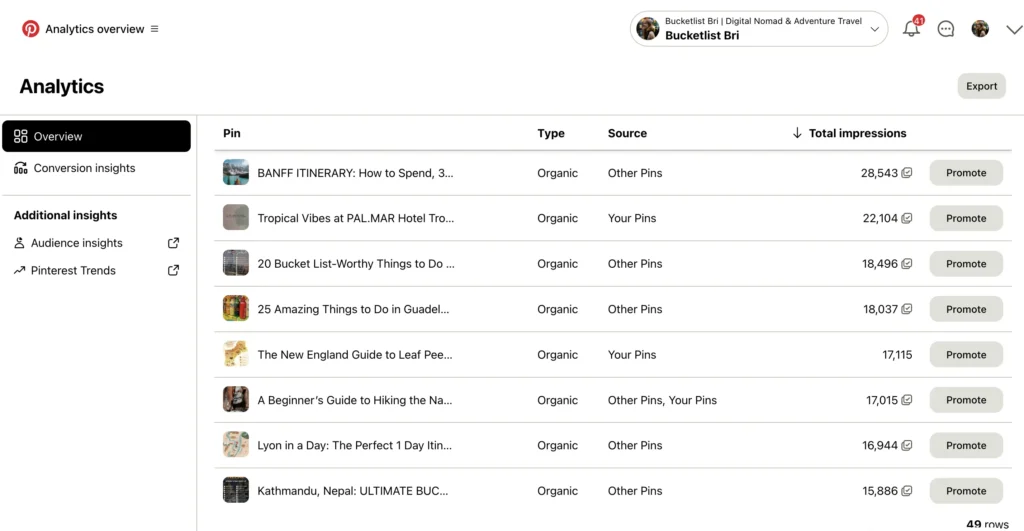
I just ran an audience analysis on my own account and discovered that throughout 2024, I received 9,500–10,000 outbound clicks per month on Pinterest to my travel blog, Bucketlist Bri. That’s more than I realized!
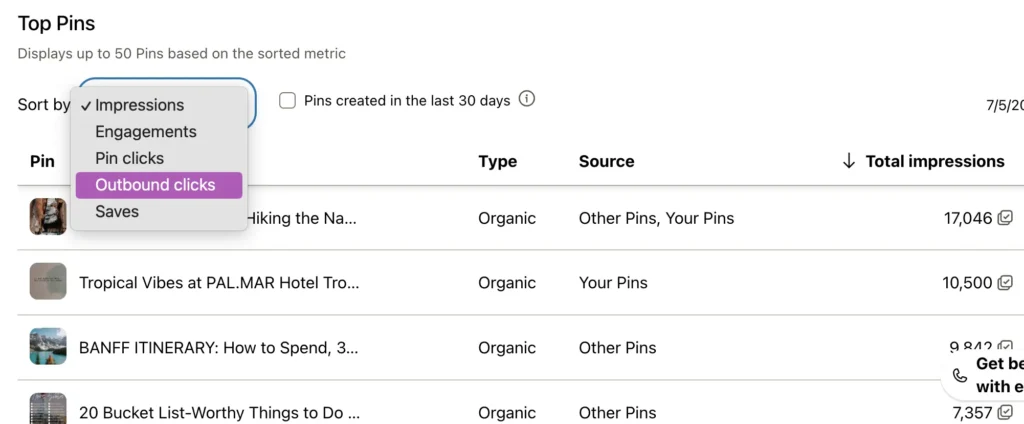
Now, in 2026, Pinterest remains a reliable, long-term source of blog traffic for me, but it’s definitely dipped—now I get 150-200 clicks per day (roughly 5,000 clicks—so about half!). For travel bloggers like me, that can be a huge loss in traffic and income, especially ad revenue.
In fact, some of my best-earning Mediavine posts, with the highest RPMs, come from Pinterest traffic. That’s saying something!
As I said, I’ve been using Pinterest to support my blog growth for over six years. My growth and knowledge didn’t come from a course or from an expert, but rather just keeping up with it over time.
I know that if I had applied these tactics more consistently, perhaps at the recommendation of a Pinterest growth expert, my growth could have been even bigger. But the reality is that I wasn’t doing a Pinterest-first blogging approach. I spent most of my time on SEO.
My growth on Pinterest, I’d wager, really came from the minimal-effort habits I built by testing what worked on my own blogs through trial and error, pin after pin, and applying them over a long enough period to see the payoff.
Again, there was a time when Pinterest drove over 10,000 clicks a month to my travel blog. Now that number sits closer to 4,500, but the difference is effort. I haven’t actively pinned in months.
And some of my top pins in the last 30 days are ones I uploaded in 2020.
How crazy is that?
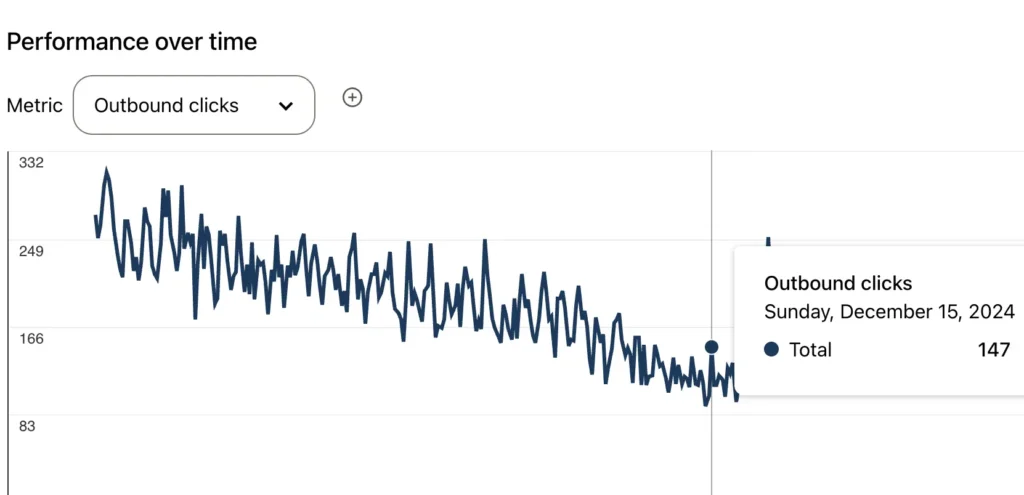
That kind of traffic only comes when you’ve built a strong foundation. The drop is expected, and it reflects Pinterest’s current priority: fresh content (and also my current energy: one of “butter spread over too much bread.”) 😆
For travel bloggers today, Pinterest is still an incredible source of blog traffic, much more than social media, which can feel so explosive.
A Quick How-to Guide to Pinterest for Travel Bloggers: Is It Still Worth It?
Some creators confuse Pinterest with social media. But it’s not that. It’s a visual search engine, and that’s always been why it’s such a great source of evergreen traffic.
People don’t come to Pinterest to follow creators; they come to search, get inspired, and even learn a thing or two. Pinterest users know what to expect from Pinterest, in that they know they need to click OUT to access the resource they found in the feed.
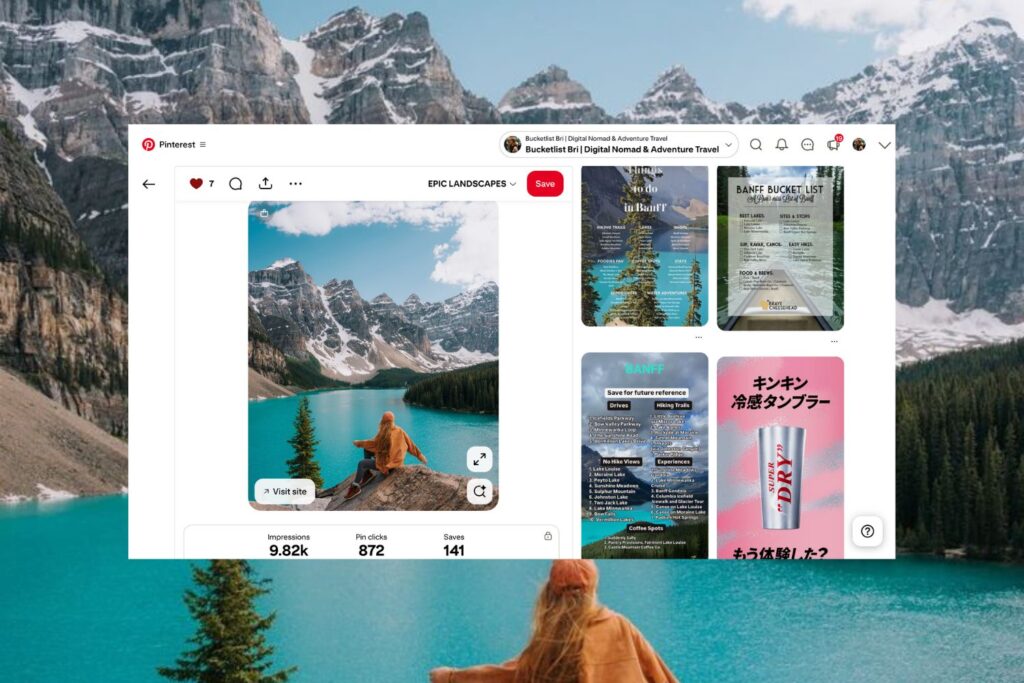
As I briefly mentioned above, Pinterest group boards were everywhere in 2018 and 2019. It was common to join dozens of niche-specific boards and repin each other’s content to gain reach. For a time, it worked. But like most shortcuts, it became saturated and spammy. Pinterest adapted, and those same group boards began to harm rather than help visibility!
What’s working now is simpler and is what I’ve always been doing (with months of disappearing, lol):
- Creating fresh pins regularly
- Using clear, search-based pin titles and descriptions (that means Pinterest keywords and SEO)
- Publishing quality blog content that answers a specific question!
- Posting consistently over time—not constantly, just consistently. Not all at once, or all to the same board.
I’m also seeing Pinterest really boost travel photography on its own, without call to actions (aka on-image text overlay).
Not always, but most of the time, some of my most “vibey” photographs get well-circulated on Pinterest because they’re exactly that—good photographs that inspire you or spark your wanderlust. Unfortunately, not many travel bloggers are good at both. Some are, but most, I’m afraid, aren’t!
What You Actually Need to Grow Your Travel Blog with Pinterest
If you were to start a new Pinterest account for your travel blog right now, here’s what I’d tell you to focus on.
1. Use a Business Account
You’ll need to set up a free Pinterest Business account to claim your website and access analytics. This lets you track which pins are performing and what people are actually clicking.
2. Create Clean, Searchable Boards with Keywords
Like with search engines and blog SEO, Pinterest also relies on SEO and keywords to rank its content.
Create boards that align with your blog categories, and don’t get too vague or too nested.
Boards should clearly reflect the topics you want to be known for, and while you can have large “umbrella” boards, you should get specific for users. Instead of just “USA,” create boards for national parks, road trips, and specific states. You can get very specific, but don’t make the content too nested.
3. Enable Rich Pins
Rich Pins essentially pull metadata from your blog and add it to the pin itself. As Pinterest says,
“Rich Pins are Pins that automatically sync information from your site.”
For posts, that’s article metadata such as title and description. It’s a small backend step that improves visibility, but it won’t make or break your Pinterest strategy. When synced, they also update with your blog.
While helpful, I don’t think Rich Pins have contributed to my success on Pinterest over the years. That’s more about this next step. ⬇️
4. Strong Visuals and Text-on-Image Pins
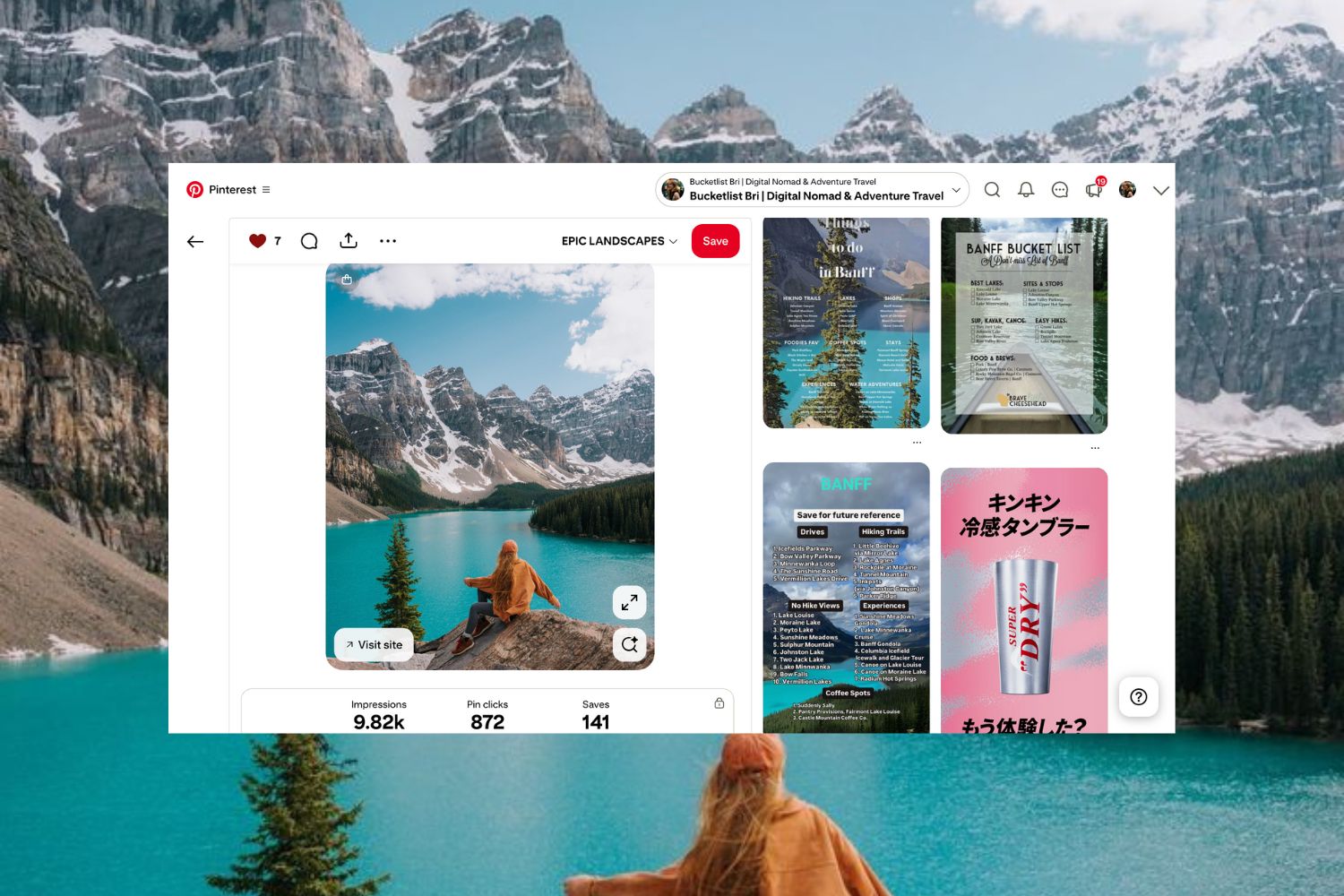
Pinterest is visual-heavy and most importantly, visual-first. They literally say it on their creative best practices page, “Visuals come first.”
So, if your pin doesn’t catch attention, it won’t get clicked.
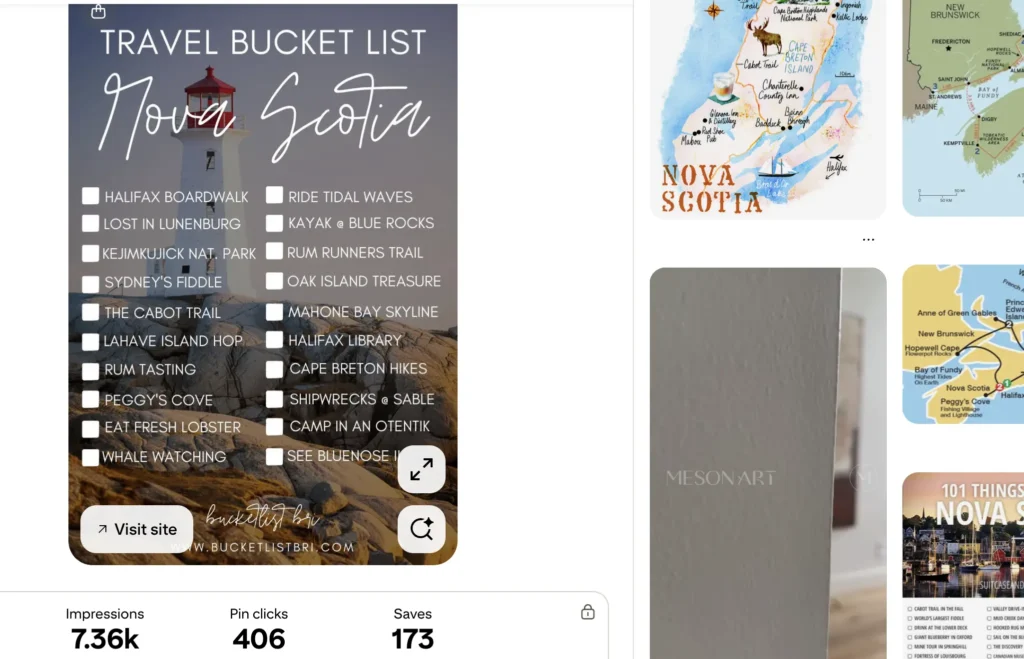
Good travel photography is key, so use your best photos, such as images that show movement, culture, nature, or storytelling.
Don’t upload photos or create a Pinterest grid with a large picture of you smiling. No one will want to save a pin with your portrait on it. ❌
A second strategy, to use in combination with the first, is to add easy-to-read, bold text overlays to your original travel photography and frames. The more relevant it is to the post, the better.
Without inspiring visuals, even the most SEO-optimized blog post won’t perform, and the same is true for Pinterest. Users decide to click in seconds.
🌟 Pins need to inspire, let your blog educate!
5. Multiple Pins per Blog Post
You don’t need to overdo Pinterest and pin 10x per blog, per board, per whatever.
Design or bulk upload just 3–5 vertical pins (1000 x 1500 px) for each post, then schedule them all at once. Sometimes I even just do one.
Each one can highlight a different angle or headline, or tweak the CTA slightly.
I use and create my own Canva Pinterest templates to speed up my workflow and rotate between different layouts. I teach you how to make your own inside my travel blogging course.
6. Keyword-Rich Titles and Descriptions (Written Naturally)
Again, Pinterest SEO is similar to blog SEO: you need to write naturally and use terms your audience actually searches for.
Instead of vague phrases like “Adventure Awaits,” write something specific that actually describes your blog post about the “10 Things to Do in Ninh Binh, Vietnam.”
Descriptions should feel natural and avoid keyword stuffing (same as a blog post) but you should include multiple variations of your main topic.
Think of it like, how can I rewrite this mini summary over and over again so that it’s unique each time?
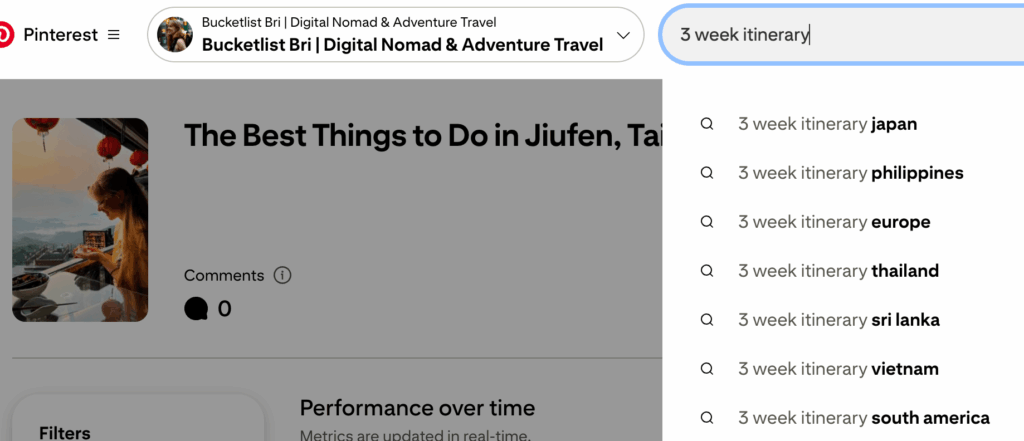
Pinterest needs that context and keywords. It analyzes not just your image for relevancy, but also title and description and the board you place your Pin into.
Think like your reader: what would they type in and how can you use that to your SEO advantage?
Examples:
- “Japan 2-week itinerary with packing tips”
- “ 1 week Morocco itinerary solo female travelers”
- “Best cheap hostels in Lisbon for solo travelers”
Again, avoid keyword stuffing and write like a real person trying to help someone plan a trip.
7. A Regular Pinning Routine
You don’t need to pin daily (or even monthly, in my case)! 😂
Even posting new pins once or twice a week can help “sustain” your account.
Whenever I publish a new blog post, I usually upload or bulk upload the best photos and 1–2 Pins (with text overlays).
If you publish one new blog post each week and create 3–5 pins for it, that’s a good, minimal way to stay consistent without overdoing it or risking burning yourself out.
Pro Tip: While Tailwind used to be the go-to for scheduling Pins, you can now use the built-in Pinterest scheduler.
Final Thoughts: What Pinterest Can & Can’t Do
Pinterest won’t replace good blog content. For example, if I see a beautiful Pin and then do an outbound click to read that blog, but find the intro TERRIBLE, I will hop off right away.
So, don’t try to “trick” Pinterest users by over-delivering on the Pin and under-delivering on the blog value. It won’t fix vague blog posts or thin affiliate pages. It also won’t deliver overnight results.
🌟 What Pinterest can do for your travel is grow your traffic with your existing content, improve ad earnings through targeted Pinterest-style posts, and, best of all, give your blog two legs to stand on beyond the behemoth of Google.
Pinterest, in my experience, works best when used as something like a support system paired with evergreen SEO for search engine/Google traffic.
When you approach it minimally but intentionally (it always goes back to intention, doesn’t it!), Pinterest becomes a reliable but low-effort source of traffic over time.
At the end of the day, Pinterest is no longer about chasing social media trends or going viral (it used to want to, but then rebranded back to itself).
Pinterest, like blogging, is a long-term game.
It requires consistency over time (doesn’t mean you have to be present every week) and actually understanding what your audience is searching for on a visual platform that they aren’t getting from the search engine angle.
So, USE your travel photography!!!
If you’re just starting out, focus on getting the basics right, including creating clean boards optimized for Pinterest SEO, good photography, and thoughtful pin design. But don’t overcomplicate it. You’ll see that you can let your pins work for you in the background.
This is the approach I teach inside Bootstrap Blogging, my signature travel blogging course and coaching program. There is a fully dedicated Pinterest Module inside the course alongside SEO, monetization, media best practices, long-term content planning, mindset, and more!
Have any questions about starting (or rebooting) a Pinterest account for travel blogging? Drop your thoughts in the comments below!


Merci, Bri. This is exactly the kind of Pinterest tips for blogging I was searching for